.png)
- CasNo 7773-01-5
- Purity 99%
Location:Home > Pharmaceutical
Quality Manufacturer Supply High Purity 99% Manganese chloride 7773-01-5 with Reasonable Price
- Molecular Formula: Cl2Mn
- Molecular Weight: 125.844
- Appearance/Colour: Rose red crystalline powder
- Vapor Pressure: 24.5mmHg at 25°C
- Melting Point: 652 °C(lit.)
- Boiling Point: 1225 °C
- Flash Point: 1190°C
- PSA: 0.00000
- Density: 2.98 g/cm3
- LogP: -5.99200
Manganese chloride(Cas 7773-01-5) Usage
|
Preparation |
Manganese(II) chloride is prepared by heating manganese(II) oxide, manganese dioxide, manganese(II) carbonate or manganese(II) hydroxide with hydrochloric acid: MnO2 + 4HCl → MnCl2 + 2H2O + Cl2 MnCO3 + HCl → MnCl2 + H2O + CO2 When the product mixture is evaporated below 58°C, the tetrahydrate salt, MnCl2?4H2O is obtained. Manganese(II) chloride is a by-product in the manufacture of chlorine from manganese dioxide and hydrochloric acid (the Weldon process). Anhydrous chloride can be prepared by heating manganese(II) oxide or manganese(II) carbonate with dry hydrogen chloride; or by burning the metal in chlorine at 700°C to 1,000°C. The anhydrous salt can also be obtained by slowly heating the tetrahydrate, MnCl2?4H2O in a rotary drier above 200°C or by dehydration in a stream of hydrogen chloride gas. |
|
Reactions |
Manganese(II) chloride forms double salts with alkali metal chlorides when mixed in stoichiometric amounts. Such double salts, which can decompose in water, may have compositions like KMnCl3 or K2MnCl4. Manganese(II) chloride forms adducts with ammonia, hydroxylamine and many other nitrogen compounds. Many adducts are stable at ordinary temperatures. Examples are MnCl2?6NH3 and MnCl2?2NH2OH. An aqueous solution can readily undergo double decomposition reactions with soluble salts of other metals, producing precipitates of insoluble salts of Mn(II) or other metals. |
|
Safety Profile |
Poison by intraperitoneal, subcutaneous, intramuscular, intravenous, and parenteral routes. Moderately toxic by ingestion. Experimental teratogenic and reproductive effects. Questionable carcinogen with experimental carcinogenic data. Mutation data reported. Explosive reaction when heated with zinc foil. Reacts violently with potassium or sodium. When heated to decomposition it emits toxic fumes of Cl-. See also MANGANESE COMPOUNDS and CHLORIDES. |
|
Physical Properties |
The anhydrous chloride is a pink solid; cubic crystals; deliquescent; density 2.977 g/cm3 at 25°C; melts at 650°C; vaporizes at 1,190°C; very soluble in water (~72g/100 mL at 25°C); soluble in alcohol; insoluble in ether. The tetrahydrate has a rose color; monoclinic crystal structure; deliquescent; density 2.01 g/cm3; melts at 58°C; loses one molecule of water at 106°C and all water at 198°C; highly soluble in water (151 g/100mL at 8°C) and extremely soluble in boiling water (656 g/100mL at 100°C); soluble in ethanol; insoluble in ether. |
|
General Description |
Manganese (II) chloride (MnCl2) might play a key role in integrin activation. Manganese is indispensable for brain function and is an essential cofactor for several key enzymes like superoxide dismutase and enzymes involved in neurotransmitter synthesis. Manganese can modulate iron and calcium homeostasis. Manganese is also used in the magnetic resonance imaging to increase contrast while examining neuronal connections and brain cytoarchitecture. High levels of manganese is toxic to central nervous system and causes Parkinson′s like symptoms called as manganism. MnCl2 has been used in reverse transcription reaction mix to enhance the template-switching efficiency. |
InChI:InChI=1/2ClH.Mn/h2*1H;/q;;+2/p-2
7773-01-5 Relevant articles
Chlorination of manganese oxides
Fouga, Gastón G.,De Micco, Georgina,Bohé, Ana E.
, p. 141 - 146 (2009)
In this work the reaction between severa...
MASS-SPECTROMETRIC MEASUREMENTS OF THERMODYNAMIC PROPERTIES OF THE MOLTEN KCl-MnCl2 SYSTEM.
Sasamoto,Itoh,Sata
, p. 2415 - 2419 (1983)
Activities and heats of mixing for the m...
Formation of super disperse phase and its influence on equilibrium and thermodynamics of thermal dehydration
Polyachenok,Dudkina,Branovitskaya,Polyachenok
, p. 44 - 53 (2008)
New data on the dehydration and rehydrat...
Study on coordination behaviour of manganese chloride with L-α-histidine
Shengli,Sanping,Huanyong,Rongzu,Qizhen
, p. 795 - 805 (2004)
The reaction thermodynamic and kinetic e...
Coordination chemistry in the solid state: Reactivity of manganese and cadmium chlorides with imidazole and pyrazole and their hydrochlorides
Adams, Christopher J.,Kurawa, Mukhtar A.,Orpen, A. Guy
, p. 10475 - 10485 (2010)
Crystalline coordination compounds [MnCl...
Pyridine-type complexes of transition-metal halides. Part XV. Mn(II) chloride complexes with 3,4- and 3,5-lutidine
Szecsenyi, K. Mészáros,Wadsten,Kovács,Liptay
, p. 965 - 974 (2004)
Manganese(II) chloride complexes with 3,...
Evolution from discrete mononuclear complexes to trinuclear linear cluster and 2D coordination polymers of Mn(II) with dihydrazone Schiff bases: Preparation, structure and thermal behavior
Bourosh, Paulina N.,Bulhac, Ion,Ch. Kravtsov, Victor,Cocu, Maria,Croitor, Lilia,Danilescu, Olga,Petuhov, Oleg
, (2021)
Four Mn(II) coordination compounds based...
Microcalorimetry study of the reactivity of two manganese ammonia chlorides
Marty A.
, p. 479 - 498 (1991)
The reaction [Mn(NH3)2]Cl2 + 4NH3 [Mn(N...
Enhanced Stability of the FeII/MnII State in a Synthetic Model of Heterobimetallic Cofactor Assembly
Kerber, William D.,Goheen, Joshua T.,Perez, Kaitlyn A.,Siegler, Maxime A.
, p. 848 - 857 (2016)
Heterobimetallic Mn/Fe cofactors are fou...
Infrared spectra of CX3-MnX and CX2=MnX2 (X = H, F, Cl) prepared in reactions of laser-ablated manganese atoms with halomethanes
Cho, Han-Gook,Andrews, Lester
, p. 477 - 486 (2011)
Small manganese insertion (CX3-MnX) and ...
Stereospecific Stille Cross-Couplings Using Mn(II)Cl2
Dakarapu, Rambabu,Falck, John R.
, p. 1241 - 1251 (2018/02/09)
Cross-coupling reactions are a staple in...
New complexes of 4-[(4-fluorophenyl)amino]-4-oxobut-2-enoic acid with selected transition metal ions: Synthesis, thermal, and magnetic properties
Ferenc,Sadowski,Tarasiuk,Cristóv?o,Osypiuk,Sarzyński
, p. 2719 - 2727 (2017/12/26)
Complexes of 4-[(4-fluorophenyl)amino]-4...
7773-01-5 Process route
-

-
columbite

-

-
7782-50-5
chlorine

-

-
10026-12-7
niobium pentachloride
-

-
7705-08-0
iron(III) chloride
-

-
7773-01-5
manganese(ll) chloride
Conditions
| Conditions | Yield |
|---|---|
|
In
gaseous matrix;
byproducts: O2; sample nonisothermal heating in quartz crucible suspended within vertical furnace in Cl2/Ar (P(Cl2)=33 kPa from 300 to 950°C; gravimetric monitoring, EDXS, SEM, XRD;
|
|
|
In
gaseous matrix;
byproducts: O2; sample isothermal heating in quartz crucible suspended within vertical furnace in Cl2 in range of 800-950°C; gravimetric monitoring, EDXS, SEM, XRD;
|
-

-
manganese tungstate
-
-
7782-50-5
chlorine
-

-
13283-01-7
tungsten(VI) chloride
-
-
7773-01-5
manganese(ll) chloride
Conditions
| Conditions | Yield |
|---|---|
|
In
neat (no solvent);
byproducts: O2; reaction in flow of Ar and Cl2, at temperature range 50-950°C;
Kinetics;
|
7773-01-5 Upstream products
-
1313-13-9

manganese(IV) oxide
-
7782-50-5
chlorine
-
13446-34-9
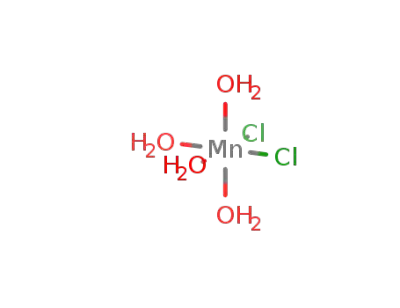
manganese(II) chloride tetrahydrate
-
7439-96-5

manganese
7773-01-5 Downstream products
-
11126-30-0

zirconium monochloride
-
13827-01-5
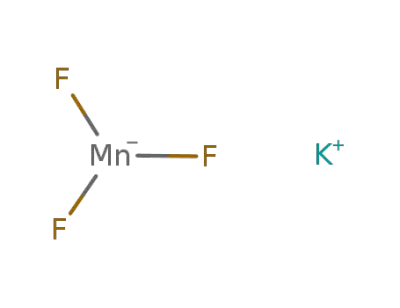
potassium trifluoromanganate(II)
-
125939-26-6
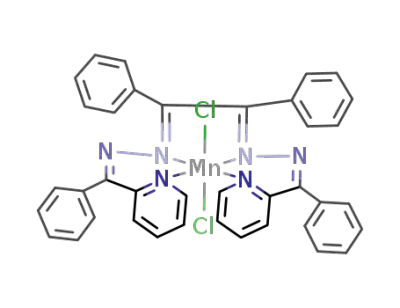
MnCl2 (bis(2-benzoylpyridine) benzyldihydrazone)

WANT TO PURCHASE
Please contact us and we will reply to you as soon as possible.